Monday, January 11, 2016

The value of a 1967 Corvette Roadster vs a 2011 Corvette ZR1 Coupe in 25 years. Which one wins?

I have posed this question to a number of my car friends, so I am putting it here for everyone's consideration.

I currently own a 1967 ("C2") Corvette convertible with the 350HP 327cid small-block, a 4-speed manual transmission, Marina Blue exterior and White/Blue interior with White top. It is in excellent condition, with a complete nuts-and-bolts restoration having been completed in 2008 (I bought the car after that, in 2009).  In today's market, I'd say the car is worth approximately $60,000 - $65,000.


Meanwhile, a used 2009-2013 era ("C6") Corvette ZR1 goes for about the same price or a bit more, around $70,000. Keep in mind, this was a car that sold for over $110,000 new and was the flagship supercar for GM during the period before the newer C7 Corvette Z06 came into being. This was a no-holds-barred shot by Corvette at all the world's top performance brands and it was a pivotal point in Chevrolet's strategy to really bring the best of automotive technology to the Corvette, which was seen as a bit "plastic" and cheap compared to some rival supercars. It ushered in the next wave of upgrades which became more standard on the redesigned "C7" Corvette Stingray in 2014.
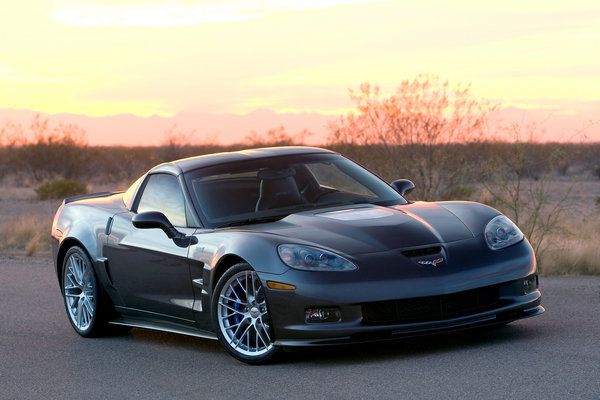


I have considered selling my 1967 and purchasing a C6 ZR1, possibly a 2011 model, assuming it would be close to an even trade in value. I could keep both, but space becomes a little tighter if I do.

So the question is this: in 25 years, which will be worth more?

Arguments for the 1967: the 1967 Vette is a classic sports car, the best in the U.S. in it's time. It may always be seen as a hallmark of design and performance for that era. Muscle cars from the 60's will always have a strong following because they are of an iconic age that will always be important and because they are easy to maintain, relative to the complex machinery of today. The design if the 1967, as the last of the mid-year Corvette C2s, remains as beautiful today as it was then.  Everyone who sees the car loves it, just as they do iconic cars like a 1961 Jaguar E-type convertible.

Arguments against the 1967: The buyers for those cars have typically been men who lived in that era and who have the disposable income in their 50's and 60's today to go back and collect that dream car from their youth. In 30 more years, those buyers are dead or out of their car buying period. The most collectable cars will always be the big-block 427s, and this car I have is a nicely optioned small-block, but there are too many of them that have now been restored relative to the number of buyers.  Every car auction seems to have an endless supply of C2 Corvettes for sale, and eventually the market will have been satisfied. If we look at the market for cars from the 1940's and 1950's, maybe there is a lesson there for the 1960's cars. Just a couple examples would be the 1953 Packard Caribbean or the 1955 Chevry Bel Air.  Both were considered highly desirable as collector cars, but in the last 5 years values have been flat to down. The people who lusted after them are just no longer driving the market.  About all they seem to benefit from now is general inflation. This is just my opinion and I would love to be proven wrong here. Highly specialized cars from the 1950's still do well (Ferrari, Aston Martin, Continental Mark II, early Corvettes), but I can't necessarily claim that my 1967 327 convertible fits that description.

Arguments for the 2011 ZR1: In 25 years, this car will likely be desired by those in their 50's that lusted after this car as a 20-year-old today when it came out in 2011. Note that there were just over 4600 ZR1s built during the 5-year production run, with about 400 built each of the last two years 2012 and 2013, so those are the more rare years.  People in 25 years may pay a premium for a nice example that hasn't been thrashed or tracked, something that will likely happen to many ZR1s today, because they have been pushed aside by the newer, shinier C7 Z06. The ZR1 is a limited production car, and although GM probably over-produced them for the current market, there will probably be more buyers than sellers in 25 years. Also by then, cars may be dominated by EV drivetrains, hybrids, or other alternates. Manual transmissions will be a thing of the past. Everything will be turbocharged for better fuel efficiency. And the next ZR1 in 2017 is rumored to be (gasp!) a mid-engined car!  So the 2011 ZR1 could represent the "pinnacle" of this second muscle era of the early 21st century. This type of naturally-aspirated V-8 with 638HP from an internal combustion engine will be like a long-forgotten dinosaur that may be worth much more money due to their place in auto history. 

Arguments against the 2011 ZR1: The 2011 car is a complex piece of technology that is not as easy to maintain as the 1967 and parts availability is unknown today. Repair and parts may become more expensive than the older car. The design was not considered revolutionary, although the car's overall performance was. 

Of course, with inflation over 25 years, if an average sedan will cost you more than double today's prices (say, $100,000), then it will be easy for both these cars to increase in value.

So, which one will be worth more in 25 years?  I'm actually starting to believe the answer will be the 2011 ZR1, if for no other reason that my arguments for and against above seemed to weigh in that direction.  But maybe one single argument is just looking at the cars... I mean, who doesn't love the 1967? 


So, there are 5 possible scenarios.

A. The 1967 will be worth more than the 2011 ZR1
B. The 2011 ZR1 will be worth more than the 1967
C. They will both be worth less than they are today, so either one is a bad "investment"
D. They will both be worth more than today, but will be close in value to each other
E. Impossible to tell, it depends on inflation

That is the multiple choice question to which I can't quite figure out the answer.  Maybe I just need to go for a drive to clear my head...


Thursday, October 15, 2015

Dave's Drives: Cayman S, a couple laps at Sonoma Raceway vs Mustangs


Here is a video from in-car at a recent track day with Trackmasters Racing at Sonoma (Sears Point) Raceway. The Cayman S was running well, and I was doing OK on the lines (only slightly better than the Mustangs I was chase and passing). I think my braking points and turn-ins still need work here.  Can't blame the car, just the driver - but I ran a few 1:56 range laps that weren't bad.  I need to drop another 5 seconds off that time, though.  For some reason, my sound is not synched well in this video...


Wednesday, August 26, 2015

Dave's Drives: Northern California Coast in the McLaren 12C

McLaren Automotive did everything right, in my opinion, when creating the MP4-12C.  It really is a superb road car that can keep you comfortable on longer trips, while being able to tear up the track when you find yourself in need of some serious speed.


So, in the spirit of its great-road-trip-car capabilities, my wife and I set out one beautiful weekend this summer to see some of our favorite spots up on the Northern California coast near Mendocino.  I'm just getting around to posting this after a short delay, but I'm already prepping to go back for another go at it. The McLaren was flawless on this trip. It makes short work of any passes necessary, feels planted at all times, and is smooth enough so your passenger doesn't feel like you should have taken a different vehicle.  And in this part of the country still untouched by time, it is almost as rare a sighting as a Starbucks cup (actually, you won't find any of those on this trip).


Here's the basic drive itinerary:

Destination / Route
Sonoma via Hwy 29 and Hwy 121
Santa Rosa via Hwy 116 and Hwy 101
Cloverdale via Hwy 101
Boonville via Hwy 128
Navarro via Hwy 128
Little River and Mendocino via Hwy 128 and Hwy 1
Elk, Gualala, Point Arena, and Bodega Bay via Hwy 1
Petaluma via Hwy 1 and Valley Ford Rd

Along the way, some terrific places to stop in Sonoma and in Anderson Valley and many amazing spots along Hwy 1:

Sonoma Square for wine tasting, breakfast or lunch.
Along Hwy 128 through the Anderson Valley:
  Boonville for the Anderson Valley Brewing Company and the Boonville Hotel
  Goldeneye (Duckhorn's Pinot Noir) wine tasting
  Navarro Vineyards (try the Chardonnay)
  Roederer Estate for sparkling wine and Chardonnay
The Little River Inn is a great place to stay on the Coast
Glass Beach in Mendocino
Point Arena feels like it probably did 50 years ago
Lighthouses (including one made famous in the movie "The Need for Speed")

And for car people: some of the most beautiful, although twisty, roads you will ever lay your tires on.  I recommend you take this trip over 2 days with about 3 hours of driving each day.  Stay overnight in Little River, Mendocino, Elk, or Gualala.  Here's why...

Cloverdale and Hwy 128, gateway to the Anderson Valley


Boonville!!


Navarro Vineyards


GOLDENEYE Pinot Noir.  Fantastic spot.


Roederer Estates


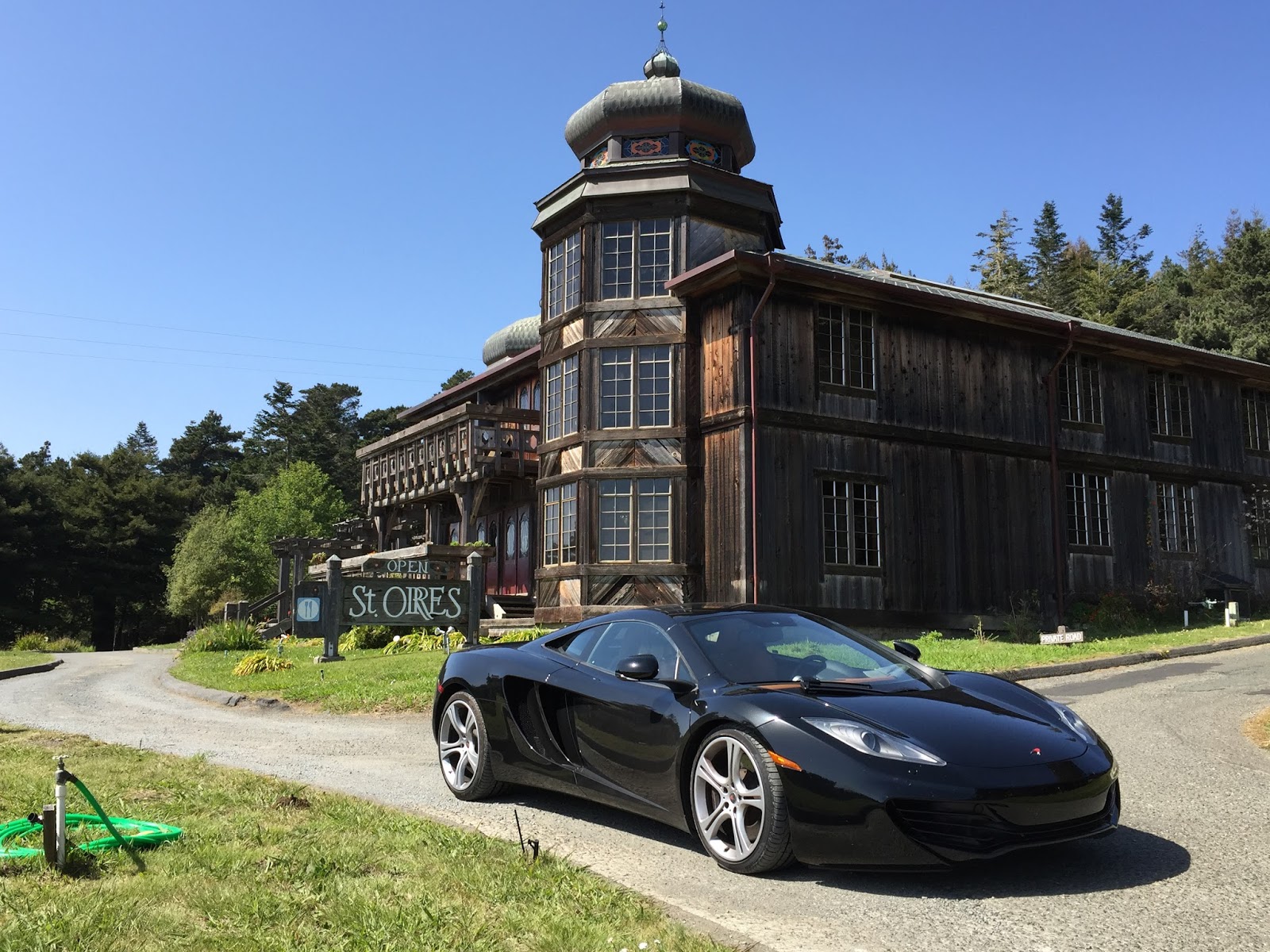
Simple curiosity.... and a great photo op.


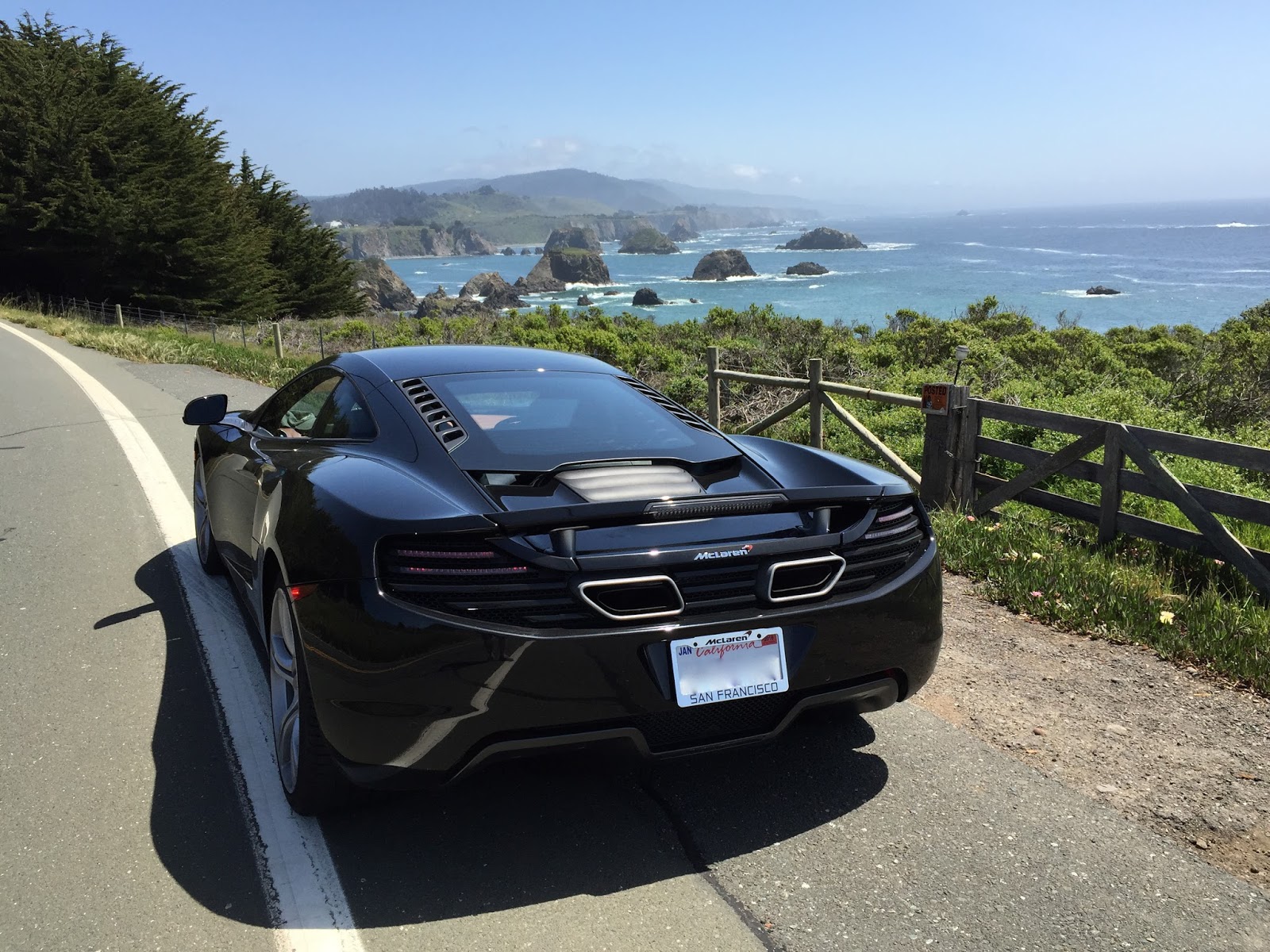
Curvy roads and redwoods.  Good stuff.


LITTLE RIVER INN, LITTLE RIVER CA 


Glass beach, Mendocino


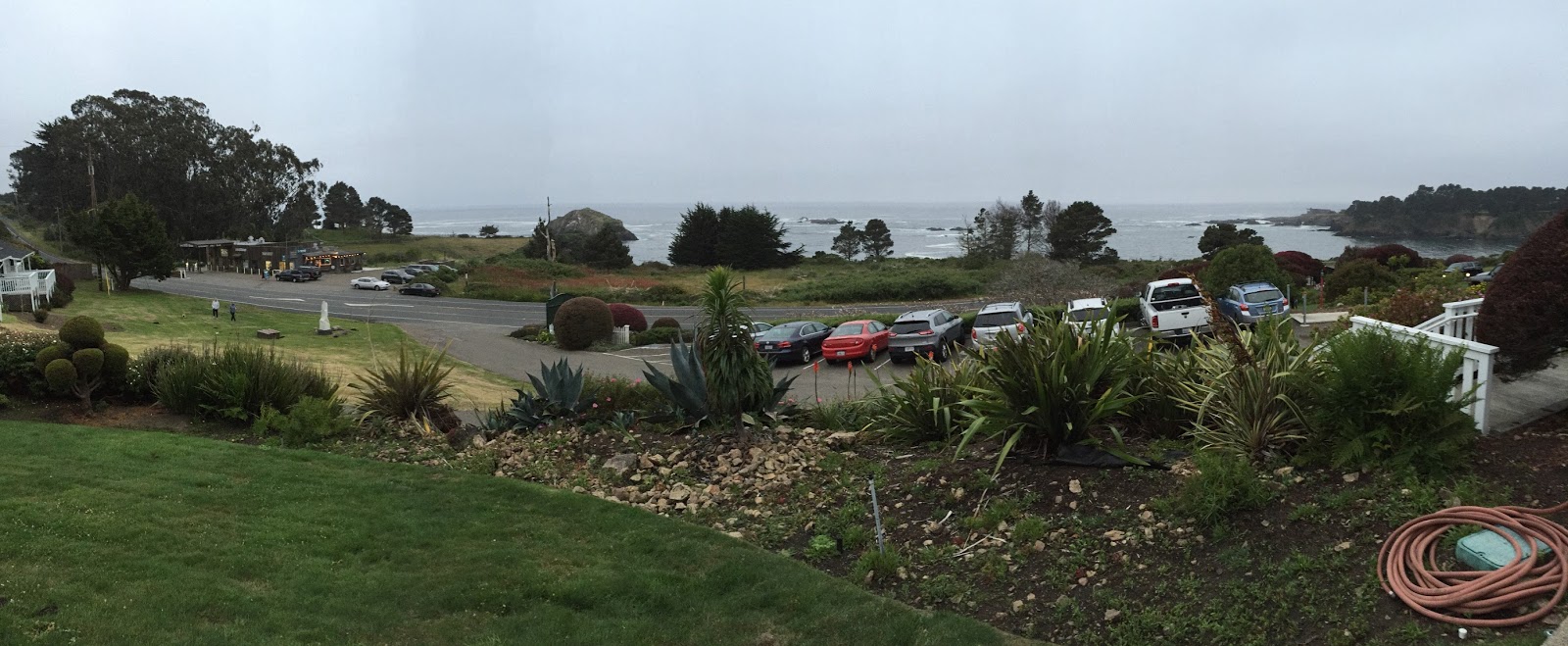
Headed down Hwy 1 South to Gualala


You might recognize this as the final chase scene location in "Need for Speed"


What more to say.  The pictures tell the story.  Go. 

Friday, April 17, 2015

Long-term ownership costs and impressions: 2007 Aston Martin V8 Vantage

I've made a couple of Aston Martin assertions to friends throughout the last year or so, they go something like this:

"Owning a used Aston Martin is cheaper than owning a new Audi/Mercedes/BMW" and
"The Aston Martin V8 Vantage is one of the great used car values out there"

My assertions are based on my own experience with the 2007 Aston Martin V8 Vantage I purchased new in December 2006 and which now has 50,000 miles. So, I thought I'd share some numbers and thoughts to help others understand my assertions and maybe consider buying one of these on the pre-owned market (as a car "addict", I am a classic "enabler" that will push others to pursue their own car addiction).


So, what is my long-term cost of maintenance?  Is it high? 

I think the answer is that my maintenance costs have been very reasonable. Over 8 years and 50,000 miles, my total spend has been approximately $14,000 in service costs (that's $1750 per year).  Here are the specifics:

10,000 mile service: $1100

20,000 mile service: $1350

Also at 20K miles: 4 new tires plus alignment $1100 ($585 for a 4-wheel alignment !) 

30,000 mile service: $1350 

40,000 mile service: $2000

Also at 40K miles: 

  New Thermostat $600

  New window regulator: $700

  Handbrake replacement: $350

  Tire inflation kit replacement: $300
  Replace small leather section curling up on of dashboard: $490
Brake jobs: $500-600 parts, $195 labor (maybe every 10K miles, depending on your driving)
Typical "minor service": $600 every 5K miles (synthetic oil)
I still have the original clutch at 50,000 miles (prob 75% were freeway miles)
Warranty work for free included: replacing things like a gas cap that wasn't sealing, a frayed seat belt, minor stuff.

So, if you buy a good 10-20K mile car now, and drive it for 30K miles, I'd say you can expect dealership costs of something like $3100 per 10,000 miles (brakes $800, tires $1000, oil/filter and 10K interval service $1300). You could save a good deal by doing the brakes yourself. My annual cost has been less because some of the service costs in the first 3 years were covered under warranty.

Total cost to own for 3 years: $9300 plus depreciation. I would argue that depreciation on a car today at $50K purchase price is likely to be less than $8K over the next 3 years. 3 years of ownership for $17,300, or $480 per month.

EDIT: Adding in this link to my more recent post where I D-I-Y the brake job for $354:
Doing your own brakes on an Aston Martin Vantage

What I like about this car:
* The sound is glorious when you open it up over 4000 RPM.  (see my video with exhaust sound at :  Dave Car Guy: back roads in an Aston Martin)

* The interior finish is beautiful, with the piano black centerpiece, the black leather with grey stitching, and the wonderful instrument cluster
* Its external proportions, with long hood and low-raked windshield and muscular fenders.
* Doors that open on a slight upward trajectory, avoiding curb-rash!
* Comfortable seats great for long trips, and reasonable trunk space
* Did I mention the sound? Intoxicating!


Why do I think this is a good used car value?
As of the date of this post (April 2015), I found the following value indicators for model year 2007-2009 V8 Vantages in the United States:

Autotrader.com: 148 listings in the U.S. with an average asking price of $64,800, a top price of $99,000 and a low price of $45,900.  Of the 148 cars, only 24 had miles over 30,000 (124 cars had less than 30K and 60 cars had less than 15K).  For the 60 cars in the U.S. under 15K miles, the average asking price was $69,700 with a low of $54,000.The NADA (National Automobile Dealers Association) Used Car Guide shows a 2007 Vantage Coupe with manual transmission to have a low retail of $45,700 and an average retail of $56,700. 

So it looks to me like you can buy a low-miles (30K or less) V8 Vantage Coupe for between $50-$55,000.  Where might the value of these cars go in the next 3, 5, 15, 20 years?

To answer that, I start with my overall collecting/value thesis:

Cars begin to appreciate in value at about 25-30 years old.  This is the point at which 45-50 year-old buyers take a look back at the cars they loved when they were around 20 years old.  They seek out cars that were their dream cars at that time or that were unattainable when they began driving.  Hence, the C2 (1963-1967) Corvette collectable market too off in the 1990s.  The 1970 muscle cars (Cuda, Mustang, Chargers, Camaro) really started to climb around the year 2000.  And recently, the surge in pricing of mid-1980s Porsches and the 1986 BMW E30 M3  is again proving that the prime collectable-buying age for "car people" is likely in the range of 50 years old, give or take 5 years.  I believe 1990-ish cars are just now on the rise after 25 years (watch for appreciate on cars like the 1991-1995 era Acura NSX and the BMW E36 M3s which came to the U.S. in 1995). Obviously, the more rare it is at the time of introduction, the more likely it will increase at a great rate. 

With that as background, a 2007 Aston has a long way to go before bottoming out in value and then re-surging.  At this point, cars that had MSRPs in the $120K- $130K range (with options) are going for $55K, or roughly 40% of original MSRP after 8 years.  Not too bad, considering most of that drop happened in the first 4 years.  Where can it go from here?  Will a 50K mile car ever be worth as little as 20% os MSRP? ($26K).  I suspect not.  Take as an example, a 2000 Porsche Carrera Coupe.  These are considered fairly cheap right now, as you can pick one up, with less than 60K miles, for around $20,000 - $25,000 (certainly you can find higher mileage cars for under $20K).  Given the MSRP of those cars in 2000 of about $70,000 - $75,000, this equates to roughly 28% of original MSRP ($20K now vs $70K then).  I would contend that these cars have reached a relatively flat part of their depreciation curve and will stay in this range for a while.  So, lets apply that 28% to an Aston Vantage from 2007 with a $130K MSRP, which yields a price around $36,400.

So is that about where it might bottom out? Here I look at similar Astons of the past.  The 1973-1979 Aston Martin V8 Vantage is a good example.  It was not prized for its looks nor its performance for a number of years.  It is only in the last 7 years that it has come back in vogue.  It is now old enough not to just look "old" but rather to look "Classic".  For my tastes, it always had a bit too much "Chevy Vega" in the looks of the rear and too much Mustang Mach 1 in the front.  But now it looks great for the period it came from.

Just a few years ago, you could buy one of these for between $25K - $60K, which compares to original 1975 price in the US in the mid $35,000 range.  Today, the Hagerty Valuation tool I puled up shows the values have increased to between $60K and $150K.  That car bottomed out at a % of MSRP much higher than what I have assumed above for the 2007.  Of course, they made only about 4000 of these cars over a 20-year period. The new V8 Vantage had produced over 10,000 cars in its first three years and I suspect they have continued to sell those at a rate of roughly 2-3K units per year (I need to check this data). 

So, take my numbers at face value and lets assume you can buy a 2007 Coupe for $55,000 with under 30K miles, drive it 10,000 miles a year for 4 years and then sell it for $36,000.  You will have lost $19K in value (at most, maybe more like $10K) plus you will have spent $12K in maintenance.  You're out $31,000 in total over 4 years.  If you want to buy a 3rd party warranty to cover any potential large mechanical issues, that will likely cost you a few thousand more for the 4 year period.  If you decide to drive this car for the next 20 years, I would then contend that you will not lose money on its value as it bottoms out and then rises, you will only suffer maintenance costs.  And if you are driving it that long, you are likely not doing many miles - maybe 3K per year, so maintenance costs are far lower (new tires and brakes every 5-7 years maybe).

For the intermediate term user, the kind that buys a new car every 4 years, it is still compelling. If you buy a new car worth $60K today, you will lose something around 45% - 50% in 4 years of depreciation, and you'd be worse off than owning the Aston Martin.  So, which ould you rather have, a cool used Aston V8 Vantage, or a Lexus LS460, Audi S5, Infiniti Q70,  Camaro ZL1, or Acura RLX Hybrid?

That, of course, is up to your individual tastes.  I know which one I pick.

EDIT: In 2018, I changed the color of the Vantage with a bright yellow vinyl wrap. Check it out at my blog post here:

http://davecarguy.blogspot.com/2018/06/aston-martin-vinyl-wrap-cool-yellow.html


Monday, December 29, 2014

Dave's Drives: The back roads of San Ramon in the Aston Martin V8 Vantage

I got a new external microphone for my GoPro camera as a Christmas gift and it seemed a great day to go test how it would pick up the sounds of my favorite exhaust.  The Aston Martin V8 Vantage is a great cruising car - a very luxurious, sporty, and capable 2-seater GT with 400 HP.  It is a fast car but not a world-beater.  But what is does have is a tremendous growl when the car opens up over 4000 rpm.  Crow Canyon Road as it heads west out of San Ramon, CA is a nice spot for a quick-fix countryside drive on a Sunday. Short and sweet and easily accessible from Danville and San Ramon but also from Castro Valley and San Leandro.  If the first 30 second of this video doesn't make you appreciate the Aston Martin, then you just don't love internal combustion engines!


Monday, November 10, 2014

Dave's Drives: Highway 84 San Gregorio to Woodside, McLaren MP4-12C

Several of my favorite roads in Northern California lead to/from the small town of Woodside.  Highway 35 (Skyline Blvd) and Highway 84 (aka La Honda Road) are two of the best roads for a Sunday drive.  You get tall redwood trees and shady, twisty roads up along the ridge of Skyline, leading you to the "Four Corners" area where 35 and 84 meet  - and where cars, sports bikes, cruisers, and bicycles from all around have been gathering at Alice's Restaurant for decades.  Heading west on Hwy 84 towards the coast and the small town of San Gregorio, you pass through the peaceful outpost of La Honda, and then the road opens up into big sweeping turns as you go through open farm country on the way to the wonderful California Coast and Highway 1.  This video was shot coming up the other direction, East from San Gregorio on the coast up Highway 84 into La Honda and Woodside. A nice 70-degree day in November and a great excuse to take the McLaren out for a spin. If you want a perfect 2-hour tour of California's best, take the circular route that starts in San Mateo at the junction of Hwy 92 and Hwy 35:  Take Hwy 35 south from Hwy 92, then West on Hwy 84 to San Gregorio, North on Hwy 1 into Half Moon Bay, then back East on Highway 92 to where you started.


Saturday, October 18, 2014

McLaren MP4-12C: My first track impressions

This week, I got a chance to take the McLaren to a couple of track day events in Northern California: one at Sonoma Raceway and the other at Laguna Seca. My initial impression: I am wowed!!  At Sonoma, my first time on track with the new car, wearing stock street tires (Pirelli Pzero), I managed to beat my best time ever in my highly track-modified Cayman S.  I was a good 8 seconds faster around Sonoma than with the Cayman and I was not pushing the McLaren nearly as hard at all.  Keep in mind I have been racing that Cayman for 3 years!

A few days later at Laguna Seca, I bested my Cayman times again, this time by only a few seconds (1:41 in the McLaren vs 1:45 in the Cayman).  Again, not pushing the McLaren very hard, and I know I can drop that time by 4-5 seconds.  I know it will handle more entry speed in the corners so I'm sure I am over-slowing and depending on the car's acceleration out of the corner to make up for it.  That's ok, it makes for a safer first experience.  I also took a few minutes to go out on the skid pad and try to break the car loose in some drifting to see how well I can control the car with steering and throttle inputs.  It went pretty well - the car is amazingly balanced. With traction control turned off, the rear end breaks loose easily with all that 600+ HP!  My flailing around caused one instructor to come over to see if I was a complete idiot or if I was actually trying to cause the car so much upset.  Nice guy, Pete, a very experienced race car driver and coach.  I then took him around the track for a session and he was amazed at the car's abilities - it never fails to blow people away what you can do with this car on track!